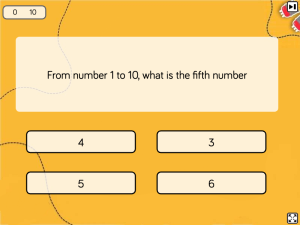
Understanding ordinal numbers (first, second, third, etc.) is essential because they teach a child the concepts of order, sequence, and position within a series. While cardinal numbers tell “how many” items there are, ordinal numbers tell “which one” based on its rank, which is a key cognitive distinction. Grasping this concept allows children to correctly follow multi-step instructions, like “First, put on your socks, and second, put on your shoes,” or correctly identify the third person in line. This awareness of where an object or event falls in a sequence is the basis for understanding routines, telling stories in chronological order, and organizing objects spatially.
The ability to use ordinal numbers smoothly serves as a critical link to more advanced mathematical and life skills. In a mathematical context, ordinality is vital for understanding place value, where the position of a digit (like the ‘3’ in 300) determines its value. In daily life, this skill is constantly used to interpret rankings in games, identify the correct floor of a building, use dates (e.g., February 1st), and read time in a structured, sequential way. Therefore, mastering the difference between “three” (quantity) and “third” (position) is a foundational skill that supports both mathematical development and clear communication in the real world.