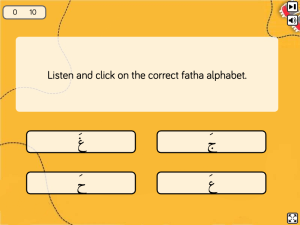
Identifying the correct Fatha sound (the short ‘a’ vowel) for an Arabic letter is critically important because it immediately allows the child to begin forming syllables and reading actual words. Fatha, being the most common short vowel mark, is the first key the child receives to unlock the basic pronunciation of the consonant. By consistently recognizing that Fatha placed above a letter like ب (bāʼ) creates the sound /ba/, the child develops the necessary blending skill—putting the consonant and vowel together—which is the absolute foundation of reading fluency in Arabic. This transition from recognizing single letters to combining them is essential.
This skill also ensures pronunciation accuracy and builds the framework for the other short vowels. Because Fatha is often the first vowel taught, its accurate recognition sets the standard for how the child will learn the ḍamma (u-sound) and kasra (i-sound). Furthermore, correctly applying Fatha helps the child distinguish between many similar-sounding Arabic letters (like the different forms of ‘h’ or ‘t’), where subtle vowel differences can dramatically change a word’s meaning. Mastering Fatha is, therefore, a non-negotiable step toward recognizing syllables, pronouncing words correctly, and ultimately reading the Quran and other Arabic texts with confidence.